

The problem
Crop disease spreads faster than most farms can inspect for it. Checking leaves by hand is slow and depends on someone recognising the disease, and by the time it is obvious it has often reached the next row. Small farms in particular have no affordable way to catch it early.
What AgroHealth does
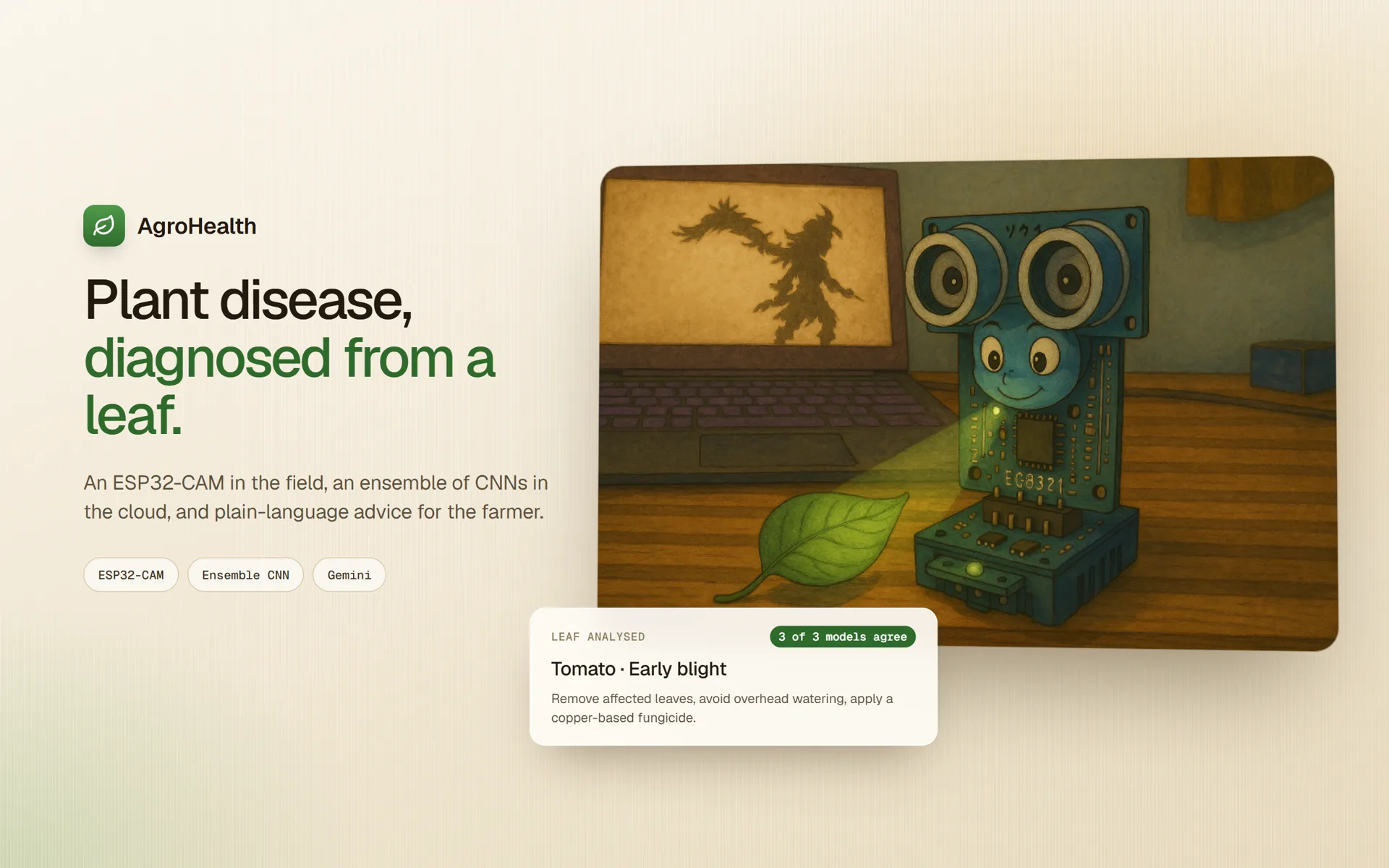
AgroHealth turns a photo of a leaf into a diagnosis and a plan. A low-cost ESP32-CAM unit photographs plants in the field and uploads the images; the model decides whether the plant is healthy, names the disease if it isn't, and explains what to do next in plain language. Farmers without the hardware can upload photos from their phone instead.
- CaptureESP32-CAM at 800×600, or a phone upload
- CropA leaf classifier keeps only the useful parts
- VoteThree CNNs at 128 and 224 px
- AdviseGemini explains precautions and next steps
The model
One network is easy to fool with an odd angle or lighting, so the diagnosis comes from an ensemble. A small classifier first finds the leaf and crops away the background; three sub-models trained at different resolutions then each name the disease, and a hard vote decides.
- accuracy
- 94%
- pathogens
- 20+
- self-collected images
- 500+
- models voting
- 3
- Training data: public plant-disease archives plus 500+ images collected and annotated by hand, so local varieties are covered.
- Stack: TensorFlow and Keras for the models, OpenCV for preprocessing.
Hardware and app
- Field unit: an ESP32-CAM that captures leaf images and uploads them automatically to cloud storage for processing.
- App: a Streamlit interface for uploading single or batch images and reading results, with Gemini turning each diagnosis into precautions, treatments and next steps.

Impact
- Speed: detection in seconds instead of a manual walk through the field.
- Cost: hardware cheap enough for small farms.
- Precision: treating only what is actually infected means less unnecessary pesticide.