The problem
Last-mile delivery breaks in small, specific ways: a restaurant running 40 minutes late, a customer marked "not home" who was home all day, a damaged package and a disputed refund. Each one is easy for a person to untangle and expensive to staff, because it means checking several systems, talking to the customer and the driver, and deciding what is fair.
What Synapse does
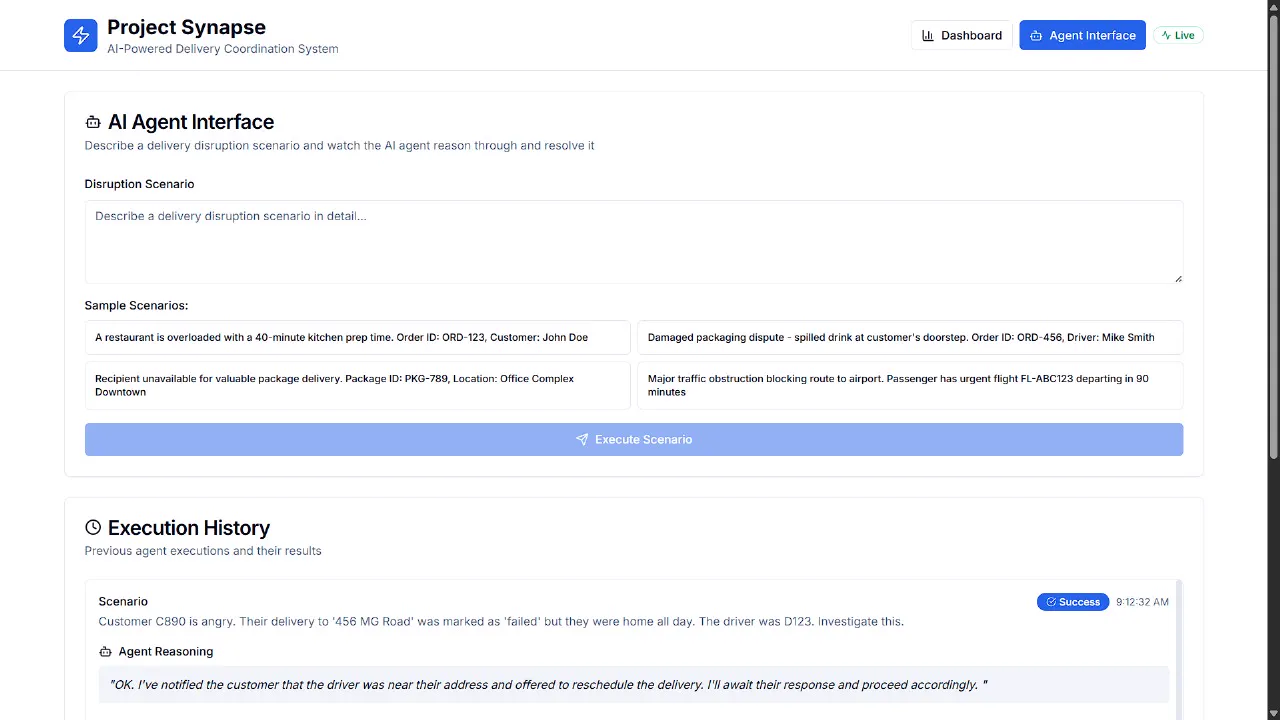
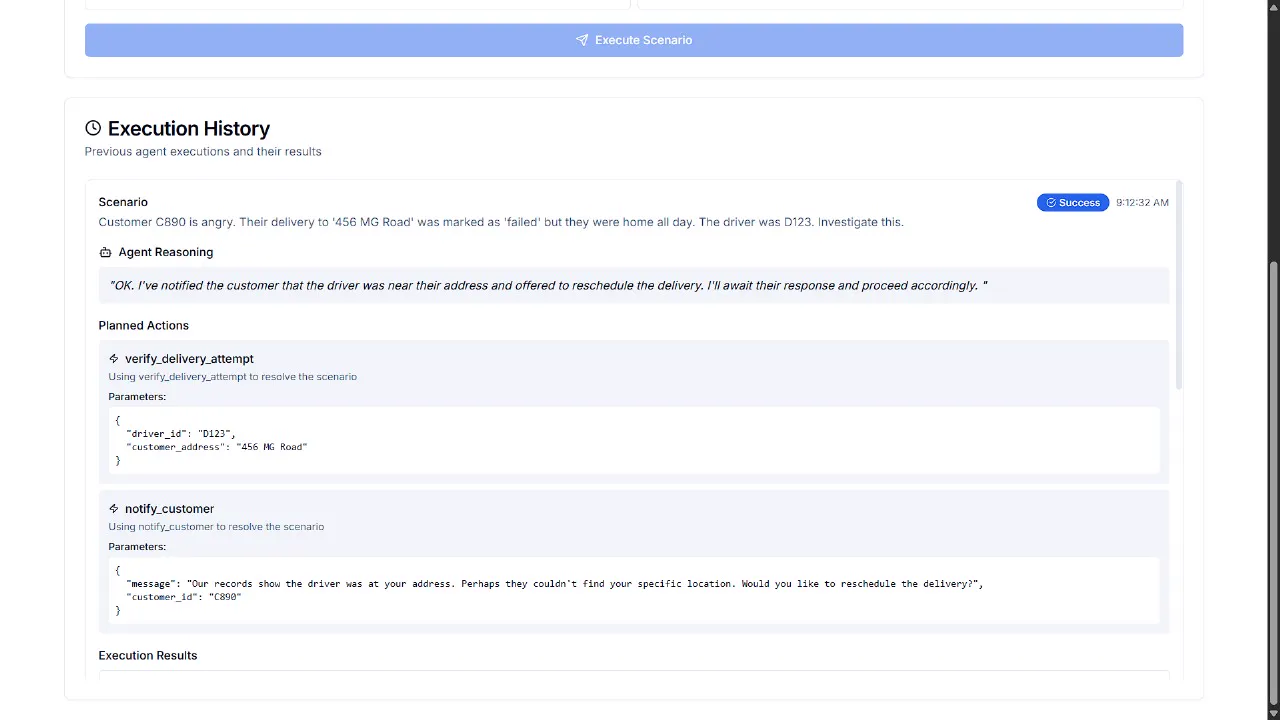
Synapse is an agentic last-mile coordinator. You describe a disruption in plain language; a Gemini-powered agent reasons about it, plans a sequence of actions, calls the tools it needs and reports back with its reasoning, the actions it took and the outcome.
- ScenarioA disruption, described in plain language
- AgentGemini plans the steps and picks tools
- MCP toolsLogistics, customer, dispute, verification
- ResolutionActions, reasoning and outcome on the dashboard
Seventeen tools, grouped by domain and exposed over the Model Context Protocol:
- Logistics: merchant status, traffic checks, rerouting a driver and finding nearby alternatives.
- Customer: notifications, chat with the recipient, safe drop-off and locker suggestions, and clarifying vague addresses.
- Disputes: mediation, collecting and analysing evidence, instant refunds, clearing a driver and logging packaging feedback for the merchant.
- Verification: checking a delivery attempt against the driver's location, and QR-code handover.
How it's built
- Agent and tools: Python, with a tool registry per domain and an MCP server and client.
- Model: Google Gemini for planning and tool selection.
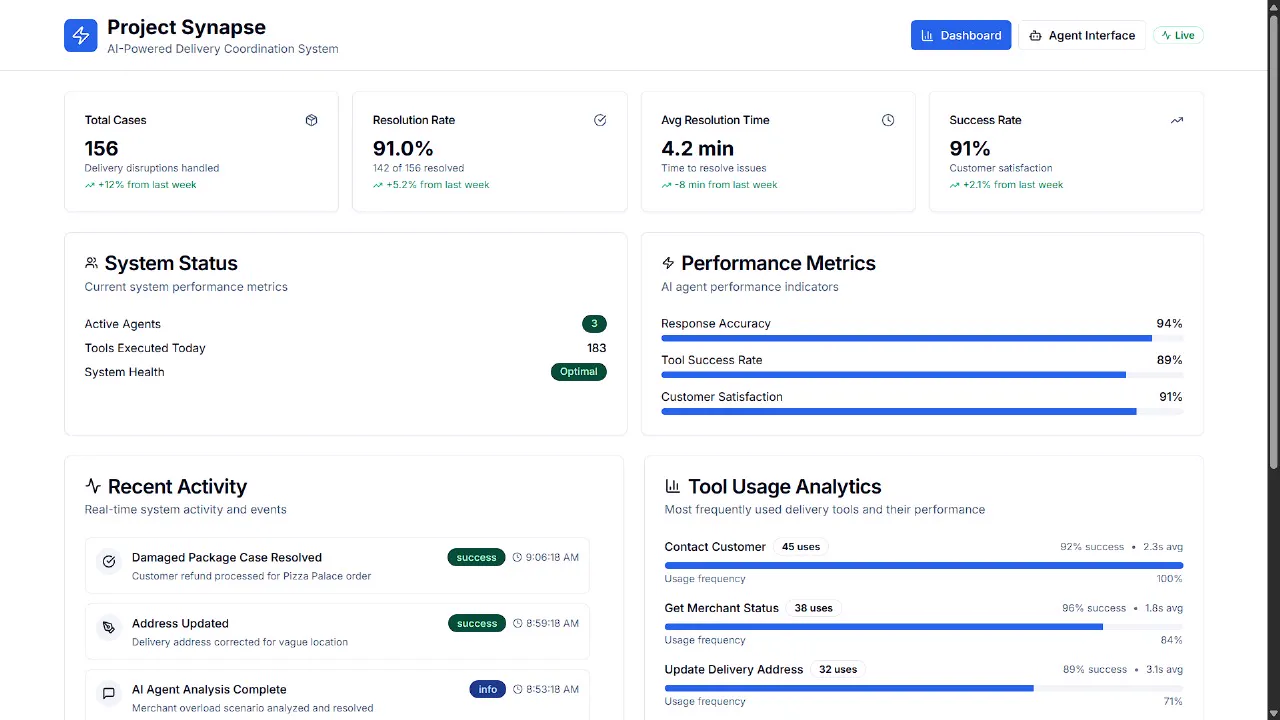
- Dashboard: Next.js with live stats, an agent console, execution history and per-tool usage analytics.
- Deployment: the MCP server runs in Docker on Hugging Face Spaces (deployed by a GitHub Action); the dashboard runs on Vercel.
Screens